
Richland County Sex Offender Checks
The Illinois State Police Sex Offender Registry is the main public channel for a Richland County sex offender lookup. ISP says the database is updated daily. Entry begins at a disclaimer that explains the source and lawful limits of the data. A person may then search by identity, location, status, or offender category. The registry is free and does not require an account.
The best starting details are a first and last name, an exact date of birth when known, or a Richland County place such as Olney. A broad name search may return more than one person. Match the photo, physical description, date of birth, aliases, conviction location, and registering agency before treating a result as the intended record. The statewide database is the current public reference; local offices are the verification route.
The official ISP search screen shows the fields used to narrow a Richland County registry lookup. The captured screen reflects the practical starting point for a person or location search.
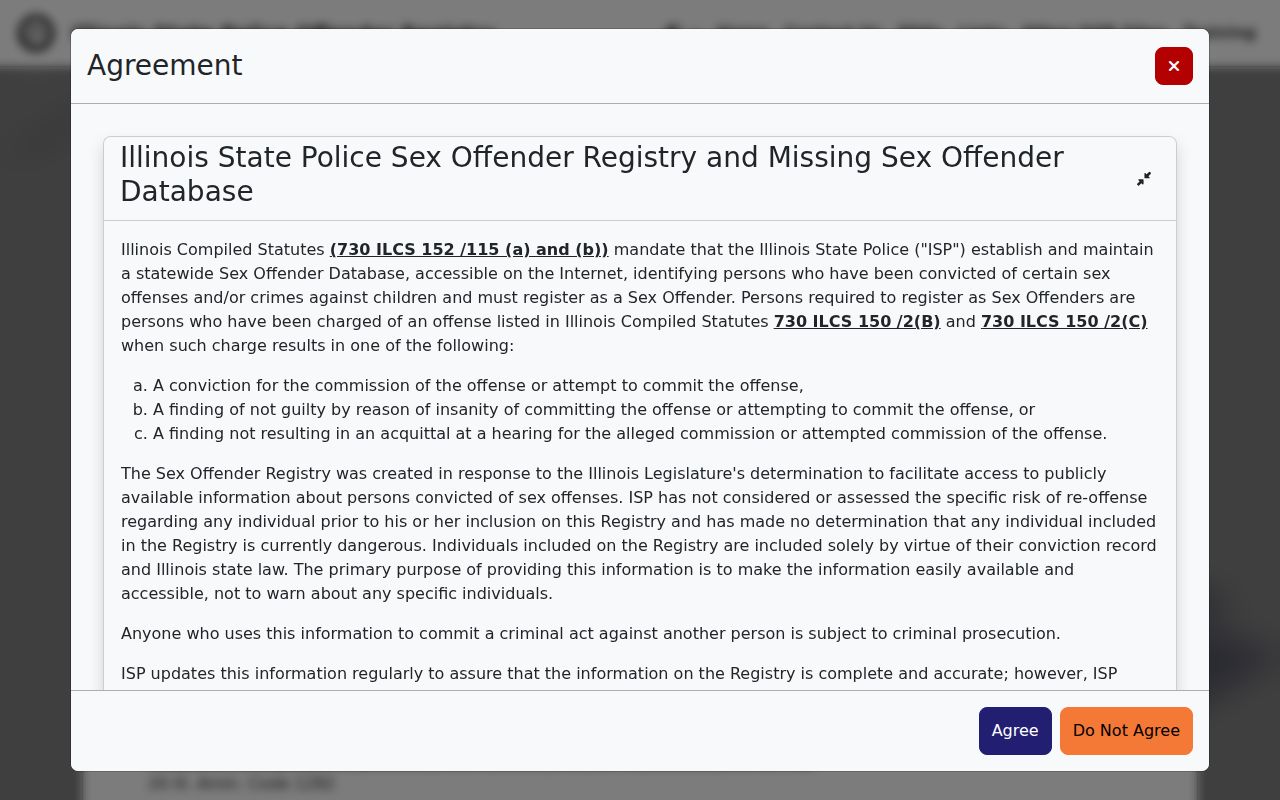
Use only enough filters to find a workable result set, then compare the full profiles rather than relying on a name alone.
Richland County Registration Routes
Registration responsibility in Richland County depends on where a person lives. An Olney resident registers through the Olney Police Department. A person in unincorporated Richland County, or in a village without its own police department, uses the Richland County Sheriff's Office. That split matters because the public profile identifies a registering agency, and that agency is the first place to ask about a questionable address or suspected noncompliance.
Richland County Sheriff's Office
211 W. Market St.
Olney, IL 62450
(618) 395-7481
Monday through Friday, 8 a.m. to 4 p.m.
The Richland County Sheriff app also advertises a sex-offender link alongside other public-safety tools. The official Apple app listing documents that local access point.
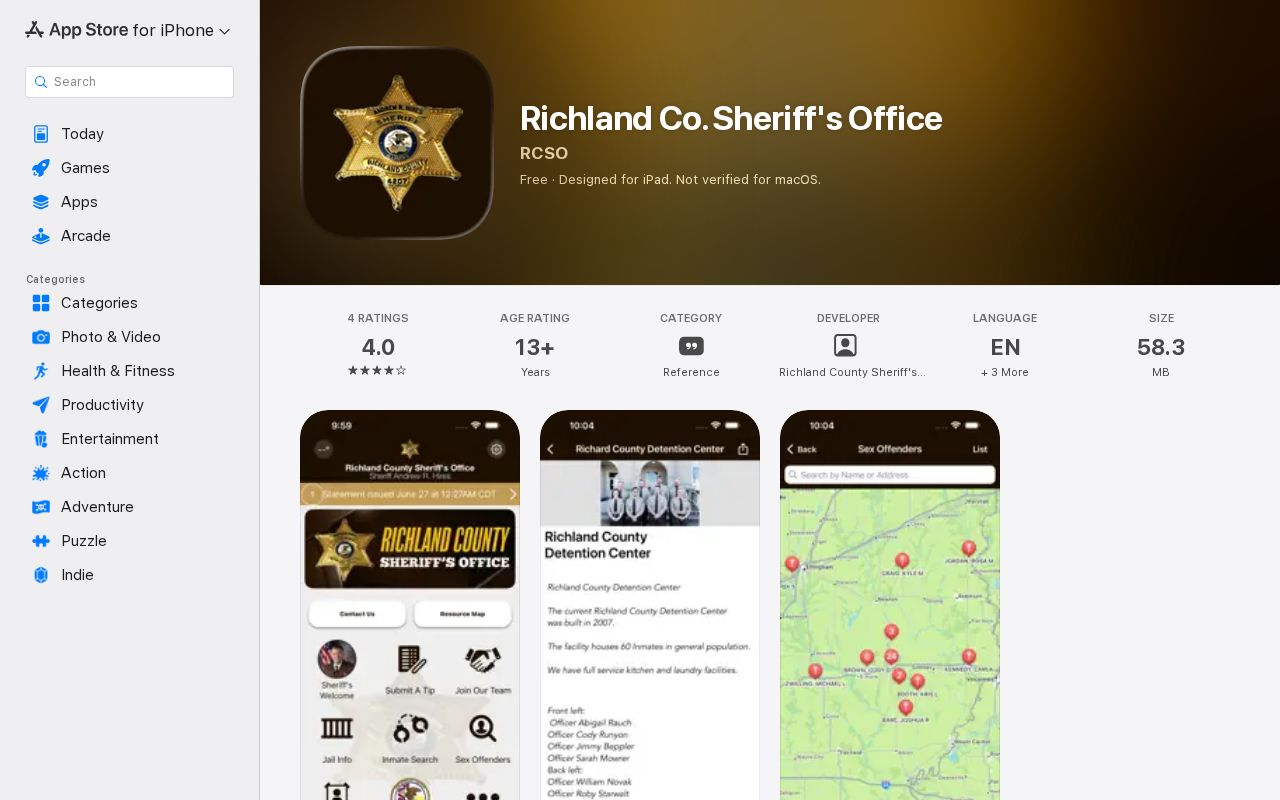
The app is an alternate route to public resources, not a substitute for confirming a registry entry with the agency named on the profile.
Registration geography also explains why a city name and a county filter may lead to different useful views. A search limited to Olney focuses on that municipality, while the Richland County filter can include listings tied to other communities or unincorporated areas. When location is the key concern, run both searches and compare their as-of dates. The agency field then tells the reader which local office can confirm the displayed information.
Illinois State Police Registry Searches
The Illinois State Police search is designed for both broad discovery and careful narrowing. ISP's own guide recommends beginning with first and last name. Too many filters can hide a relevant entry when an alias, spelling, city, or recorded status differs from what the searcher expects.
- Open the ISP registry and accept its disclaimer and conditions of use.
- Enter a first and last name, or begin with a Richland County city, ZIP code, or county filter.
- Narrow the list with date of birth, status, homeless, or offender-type fields when needed.
- Open Details, check the as-of information and registering agency, then verify uncertain facts with that agency.
| Field Label | Type | Required | Use |
|---|---|---|---|
| First Name / Last Name | Text | No | Start with both names, then compare identifiers. |
| Date of Birth | Date/text | No | An exact birth date narrows a common name. |
| City / ZIP Code | Text | No | Limits results to a municipality or postal area. |
| County, Incarcerated or Out of State | Dropdown | No | Select Richland County or another location category. |
| Status / Homeless | Dropdown / checkbox | No | Filters by compliance status or a homeless notation. |
| Offender Type | Dropdown | No | Uses Illinois public categories, not federal tier labels. |
Mapping Richland County Registry Records
ISP's Map Your Neighborhood feature changes the question from “who is this person?” to “what listings appear near this place?” A reader enters an address or selects a point on the map. Yellow markers open details in a side pane. This can help with community awareness around a Richland County address, but a marker should not be read beyond the data it represents.
A marker is tied to the registry's as-of information. It does not prove that a person is present at that spot at a given moment, and it does not measure risk. If an address appears wrong or a listed person cannot be located, ISP directs the public to local law enforcement. In Olney that means Olney Police; elsewhere the profile's registering agency may point to the sheriff.
Registry Profiles: What They Show
A Richland County registry profile brings identification, registration, and conviction-related fields into one public display. The information is useful for matching a person and understanding the legal registration category, but it is not the full criminal case. Filed pleadings, judgment documents, and the court case number come from the Circuit Clerk in the county of conviction.
| Name and Aliases | Primary name, known aliases, date of birth, and alias birth dates. |
|---|---|
| Photo and Description | Dated photo history plus height, weight, sex, and race. |
| Location | Address or custody/out-of-state status and the registering agency. |
| Offense Information | Crime description, conviction state and county, victim age, and offender age at the offense. |
| Illinois Category | Sex offender, sexual predator, or another statutory designation when applicable. |
| Registration Status | Compliance status, original and recent registration dates, duration, and the profile as-of date. |
The public profile inspected for this research did not show vehicles, employer or school, tattoos or scars, a court case number, or a full judgment. Registration forms come from the registering agency. A conviction file comes from the appropriate Circuit Clerk.
Richland County Profile Limits
The registry tells a different story from a court docket or an ISP conviction response. Its purpose is public notification about a person who meets statutory registration criteria. It is not a full statewide criminal history, and it does not show every event in the underlying prosecution. A CHIRP conviction response also does not replace the specialized registration details and status shown here.
The ISP registry FAQ explains categories, duties, and registration periods that shape a Richland County listing.
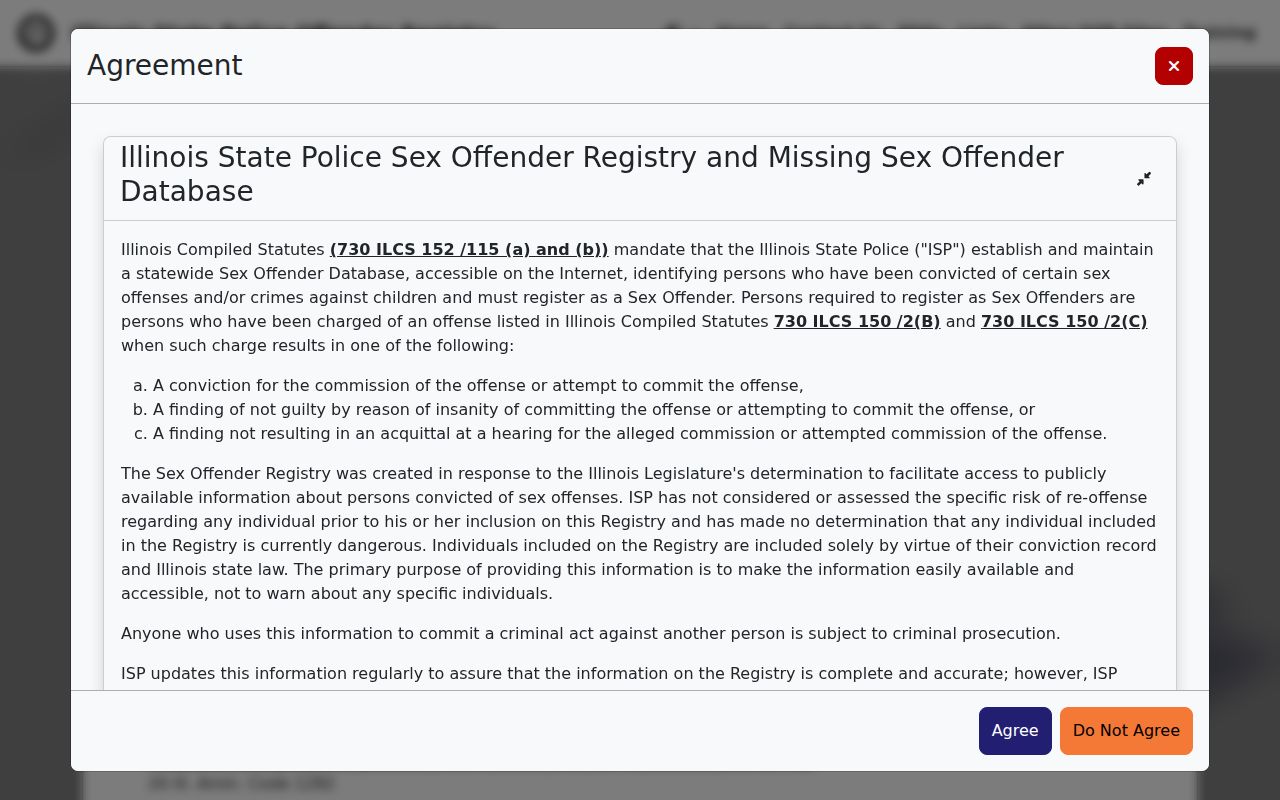
Read that guidance with the individual profile because incarceration, later offenses, tolling, and registration violations can change a person's period or reporting schedule.
Registration Levels and Duties in Illinois
Illinois does not use federal SORNA Tier I, Tier II, and Tier III labels as the operative categories in its public registry. The Illinois statutory labels and schedules below are the relevant terms. The general periods can be affected by tolling, incarceration, later offenses, and extensions, so the profile and registering agency remain important.
| Illinois Category | General Duration | Verification Frequency |
|---|---|---|
| Sex offender | 10 years under statutory start and tolling rules | Generally annual |
| Sexual predator | Natural life | Annual |
| Sexually dangerous or sexually violent person | Natural life | Every 90 days |
| Registration Act violation conviction after July 1, 2005 | Remaining or extended period | Every 90 days |
ISP materials describe three-day deadlines for reporting common changes. Juvenile-adjudicated registrants follow different public-display rules. Initial and annual registration fees are listed as $100, but payment questions belong with the registering agency.
The Illinois Sex Offender Registration Act is the primary source for registration duties and duration.
The statute provides the governing detail when a short public profile or general FAQ cannot answer a question about a reporting duty.
Cross-State Checks Beyond Richland County
A local or state search can miss the geographic context needed when a person has lived, worked, studied, or registered outside Illinois. The U.S. Department of Justice National Sex Offender Public Website provides a separate cross-state search. It is a supplement to the Illinois database, not a replacement for the ISP profile or the local agency's verification.
The official NSOPW search provides that national layer for a name or area check.
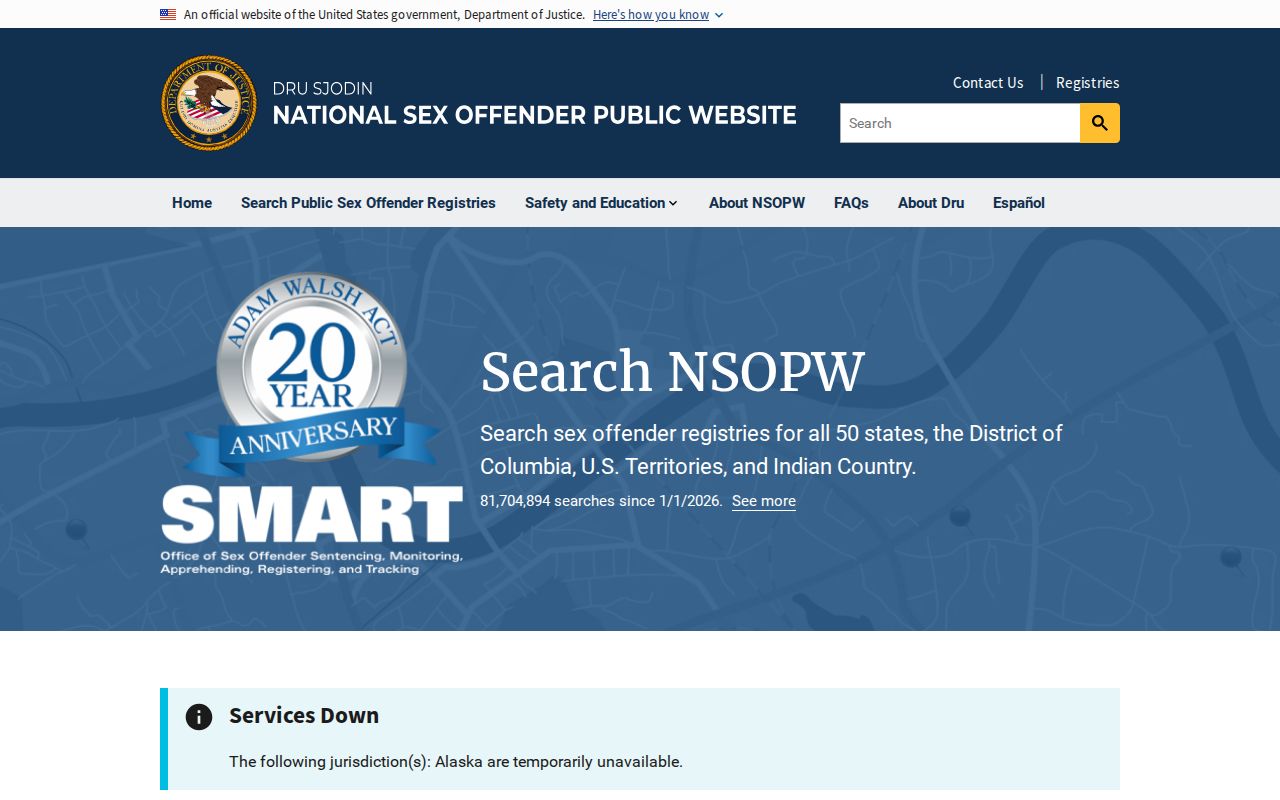
When an NSOPW result points back to Illinois, use the ISP record for the state's current detail and contact the named registering agency about accuracy.
Correcting Richland County Registry Details
A stale address, uncertain status, or apparent mismatch should be reported, not “corrected” through assumptions. First note the profile's as-of date and registering agency. Then contact Olney Police or the Richland County Sheriff's Office, as the listing directs. ISP advises contacting local law enforcement when a registrant cannot be located.
Program questions and correction concerns may also go to the ISP Offender Registration Unit at ISP.SOR.Unit@illinois.gov. Give the agency enough information to identify the public profile without publishing or circulating personal details. For the underlying conviction, use the court record rather than asking the registry to supply documents it does not hold.
Using Registry Information Lawfully
Illinois makes registry data available for awareness and safety planning. The public notice does not authorize contact, confrontation, threats, or punishment. It also does not predict whether a listed person will commit another offense. The ISP disclaimer says some facts come from registrants and directs users to verify accuracy with the registering law-enforcement agency.
The Sex Offender Community Notification Law, 730 ILCS 152, governs public notification and the internet database.
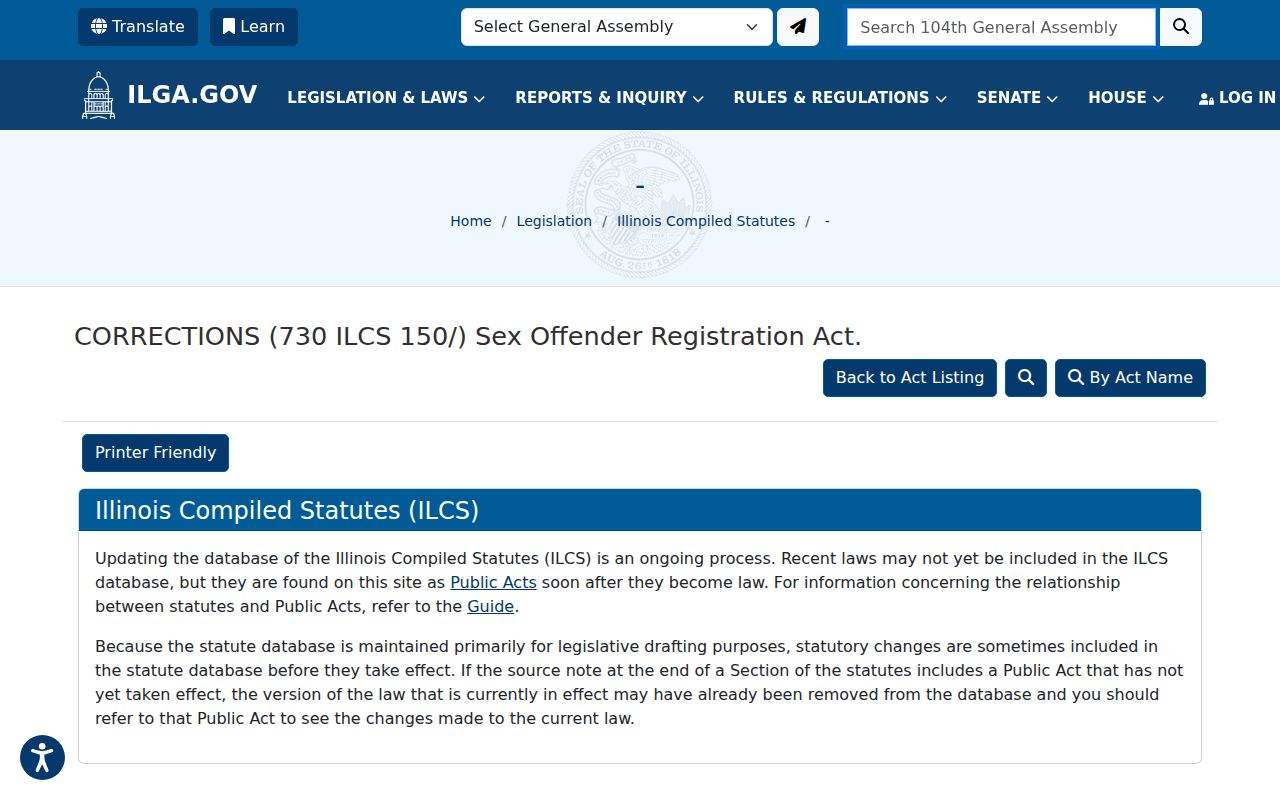
That law frames the Richland County sex offender lookup as a public-safety resource with firm limits on misuse.
Safe use also means avoiding unsupported conclusions. A registry category arises from Illinois law and the listed adjudication; it is not a score of present danger. Do not infer that every person at a listed home is registered, or that a map point proves anyone is there now. Use the record to plan ordinary precautions, then rely on police for an urgent safety issue and the registering agency for a factual correction.
Use the registry lawfully: Illinois warns that using registry information to harass or threaten a registrant or the person's family is prohibited, and criminal misuse can be prosecuted under 730 ILCS 152/115.